Agricultural project

Agricultural project

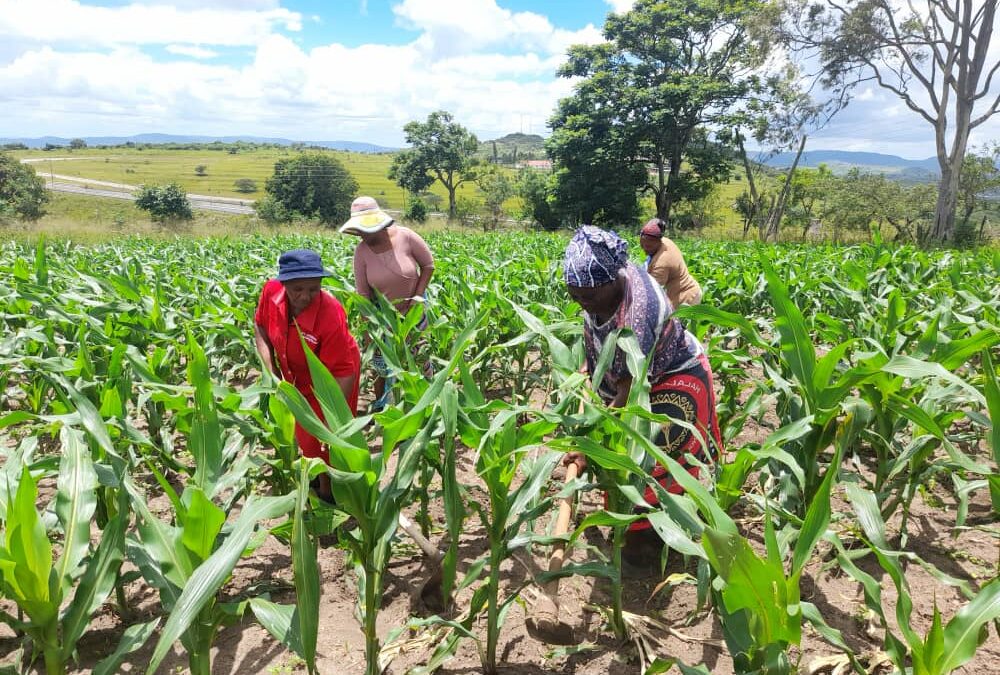
The “St Joseph’s Agricultural Project was conceived and developed with the objective of developing and sustaining skills of disabled learners living and studying at St Joseph’s Boarding House. The goal was to upgrade the farm at St Joseph into a more proeductive agricultural farm.

The lack of an irrigation system makes us rely on rainwater during the summer season.

We do hope that by installing an irrigation system we would be able to produce vegetables even during the dry winter season.

As soon as we received the first rains, we immediately began with maize production. The entire production, from preparation to harvest was a huge success. Everything unfolded according to schedule.

We continued to observe a significant drop in the Boarding Hostel’s food budget. This gives us hope that the Boarding Hostel will continue to exist and serve children with disabilities in the country through the benefits of this project.

Catholic Parliamentary Liaison Office (CPLO)

Catholic Parliamentary Liaison Office (CPLO)

The Catholic Parliamentary Liaison Office (CPLO) was established by the Southern African Catholic Bishops’ Conference (SACBC) in the post-Apartheid era as the official channel of communication between the Catholic Church and the Government of South Africa.

Its mandate was subsequently expanded to encourage other dioceses to consider the establishment of local CPLOs, thereby fostering engagement with the Parliaments and Governments of their respective countries within the Central and Southern African region.

This extension reflects the CPLO’s broader mission to promote dialogue, collaboration, and advocacy on issues of governance, public policy, and social justice, in full alignment with the principles of Catholic Social Teaching.

It enables the Church, as a critical part of civil society, to participate meaningfully in public discourse on matters of policy and legislation that impact the lives of people.

Through the CPLO, the Church engages with politics, economics, development, and social issues, ensuring its voice is present in shaping policies and advocating for the common good. This engagement is rooted in Catholic Social Teaching, which provides a moral framework for addressing contemporary challenges.

Fr Sakhile Ndwandwe

For the right to an education

For the right to an education

Let us pray for migrants, refugees and those affected by war, that their right to an education, which is necessary to build a better world, might always be respected.

Pope Francis

Today we’re experiencing an “educational catastrophe.” This is no exaggeration. Due to wars, migration, and poverty, some 250 million boys and girls lack education.

All children and youth have the right to go to school, regardless of their immigration status.

Education is a hope for everyone – it can save migrants and refugees from discrimination, criminal networks, and exploitation…. So many minors are exploited! It can help them integrate into the communities who host them.

Education opens the doors to a better future. In this way, migrants and refugees can contribute to society, either in their new country or in their country of origin, should they decide to return.

And let’s never forget that whoever welcomes the foreigner, welcomes Jesus Christ.

Let us pray for migrants, refugees and those affected by war, that their right to an education, which is necessary to build a more human world, might always be respected.

(Pope Francis prayer intention, January 2025)

Reaching out to deaf people

Reaching out to deaf people

In 2013, Pope Francis penned his encyclical Evangeli Gaudium (The Joy of the Gospel) in and called the church to a pastoral conversion by becoming an evangelising church, a missionary church which responds to Jesus’ instructions to his disciples to “Go and make disciples”. Francis wrote: “We are asked to obey his call to go forth from our comfort zone in order to reach all the ‘peripheries’ in need of the light of the Gospel” (EG 20).

One of these peripheries is the Deaf community. In his most recent encyclical Fratelli Tutti (We are all brothers and sisters), Pope Francis demonstrates how we are to “rebuild our wounded world by imitating the Good Samaritan” (FT 67). “We cannot be indifferent to suffering and we cannot allow anyone to go through life as an outcast” (FT 68). People with disabilities, in particular, “feel that they exist without belonging and without participating. Our concern should be not only to care for them but to ensure their ‘active participation’ in the civil and ecclesial community” (FT 98).

While spiritual and pastoral care for the Deaf community remains an important outreach, many Deaf people are unemployed and poor. It was decided by the Catholic Deaf community to start a sewing project for Deaf women.

Fr Mark James OP

“Caring for refugees” campaign

“Caring for refugees” campaign

Last October 22, 2024 the Catholic Bishops Conference of Mozambique ended a statement saying:

“Mozambique must not return to violence! Our country deserves truth, peace, tranquillity, and tolerance!
Let us pray for peace, be artificers of justice, and witnesses to the truth”.

It was a prophetic voice.

Unfortunately it was not heard and Mozambique returned to violence. As reported also by UNCHR, post-election unrest in Mozambique has forced thousands of people to flee their homes. Many crossed the border into Eswatini.

On December 30, 2024 the Prime Minister of Eswatini reported before December 15 asylum seekers would not be over 23 a day. It changed in the second half of the month and in just one day (29 December) 399 arrived at Malindza Refugee Reception Centre.

Caritas Eswatini got in touch with the Reception Centre and, on 31 December, thanks to different donors we were able to provide 150 mattresses and 150 blankets.

We are grateful to the Southern African Catholic Bishops’ Conference (SACBC) for reaching out to us and sending their contribution.

Having heard of the inmediate needs, the bishop launched an appeal to the diocese of Manzini asking to celebrate the feast of the Epiphany of the Lord in a different way: each child would donate a toy from home and each family would bring canned fish.

Members of religious communities who speak Swahili and Portuguese were also asked to offer psychosocial and counselling services.