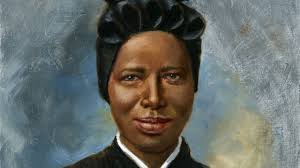
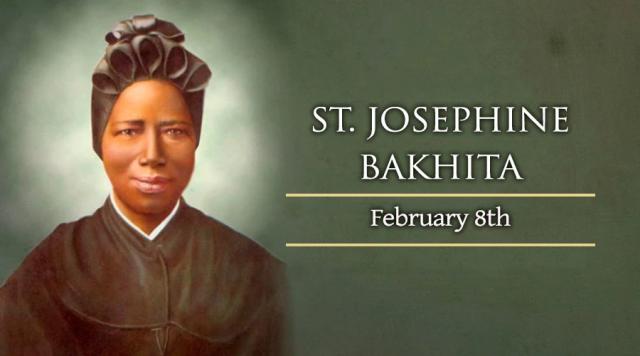
St Josephine Bakhita

St Josephine Bakhita

O Saint Josephine Bakhita,
witness of hope and liberation,
you who were enslaved, sold, and humiliated,
but did not let hatred dominate your heart,
intercede for all those who, even today,
are victims of human trafficking and modern slavery.

Teach us to fight
for the dignity of every person,
to be courageous
in defending the rights of the oppressed,
and to cultivate the love
that liberates and transforms.

Saint Bakhita,
example of unshakable faith,
help us to trust in God’s providence
and to be instruments
of peace and justice in the world.

Pray for us, that we may never lose hope
in the power of Christ’s love,
which redeems and restores all humanity.

Amen.

St Bakhita’s history

St Bakhita’s history

Saint Josephine Bakhita was born around 1869 in Darfur, Sudan, in a small African village.

As a child, she was kidnapped by slave traders and endured years of suffering, being sold multiple times and
subjected to forced labour and mistreatment.

After years of enslavement, Bakhita was purchased by an Italian consul who brought her to Italy. There, she was entrusted to the care of a family who treated her with kindness. During this time, she was introduced to Christianity and found in her faith in God a source of hope and redemption.

In 1890, Josephine was baptized and confirmed, adopting the Christian name “Bakhita,” which means “fortunate.”

Shortly afterward, she joined the Canossian Sisters, dedicating her life to serving God and caring for those in need.

Bakhita became known for her humility, kindness, and unshakable faith, despite the horrors she had endured. She once said: “If I were to meet those who enslaved me, I would kiss their hands, for it was
through them that I came to know Christ.”

Josephine Bakhita passed away on February 8, 1947, at the age of 78, in Italy. Her life is a powerful testimony of forgiveness, faith, and resilience.

In 2000, she was canonized by Pope John Paul II, becoming the first Sudanese saint and the patroness of victims of human trafficking.

Her memory is celebrated on February 8.

Saint Bakhita inspires us to live with courage, love, and trust in the power of God to transform even the most difficult situations.
Deaf hands

Deaf hands

Nompilo Lupupa is the sewing project’s manager. “We started the project in February 2020 because we could see that many deaf women were staying at home with nothing to do,” she said. “We wanted to start a project that could help them earn some income for themselves and for their families.”

“The parish had donated a lot of old denim jeans and we started making bags for women from these denim jeans.” Deaf Hands was the name chosen for the sewing project. “It is with our hands that we Deaf people communicate with one another but it is also with our hands that we display our creative skills and talents,” Nompilo explained.

“We are making embroidered bags, place mats, aprons for the kitchen, shirts and dresses, cushion covers, centre pieces and table clothes.”

“The big challenge during the pandemic was finding people to buy the items we make,” Nompilo said, “thankfully the diocese has opened a Catholic shop in Manzini called Good Sam. Some of our goods and wares are displayed and sold from the shop.”

“It is our hope,” she continued, “to increase our income so that we can realise the dream to include more Deaf women in the project. We would also be able to expand into knitting school jerseys for school children, hairdressing and nail care too. The more that Deaf women can benefit, the better.”

Sign language classes

Sign language classes

September is the month dedicated to Deaf Awareness across the globe. It is important time to conscientize the hearing community about Deaf culture, sign language and developing better relations between hearing and the deaf in family life. Sibusiso Zulu and Nqobile Mkhonta, both Deaf, have been teaching sign language to hearing parishioners who are interested in communicating with Deaf people. This project will resume in February 2025.

This programme was first started before Covid, Before Covid, the first classes ran for six weeks from October to November 2019. The Deaf community in the Cathedral parish started teaching regular Eswatini Sign Language (ESL) classes on Friday and Saturday afternoons. There was an enthusiastic response and over 60 hearing parishioners signed up for the classes. The classes resumed at the beginning of Lent in March 2020 but they had to suspended due to the rapid spread of Covid.

The enormous interest in sign language from the hearing parishioners had a huge impact on the Deaf community. They felt less isolated and more at home in parish when they saw hearing people make the effort to learn sign language. This built a wonderful bond of trust and friendship between the two communities.

God’s providential care has assisted us in getting this far through the various organisations that have assisted us. It is the prayer of the Catholic Deaf community that this assistance will continue so that all Deaf people and the disabled in Eswatini can be empowered and assume their rightful place within the church and society.

Fr Mark James OP

School fees: our yearly project

School fees: our yearly project

As soon as the Christmas and new year’s holidays are over and people are back at work at “Caritas Eswatini” and the offices of the “Diocese of Manzini”, long queues used to be seen at the Caritas office. The reason was always the same: people were looking for help to pay the school fees.

In the past, the bishop of the diocese would welcome each person at his office and listen to their needs.

Later on it was decided to involve Caritas Eswatini in the listening and identifying the most desperate cases.

One one side it helped us know the poorest. On the other side, people had to come twice. First to be interviewed by Caritas and later on to receive some help from the bishop himself. The project, in fact, has always been linked to the bishop.

Today, people no longer come to our offices in Manzini. Identifying the poorest is in the hands of “Parish Caritas”.

Each Parich Caritas selects between 10 and 15 children from their area. A copy of their school results and school banking details are sent to the Caritas national office who pays online for about 20% of the schools fees of each one of them.

It would be ideal to pay for the full amount but our funds are limited. The goal is to help these families to start the year while the gather the rest of the money needed.

We are grateful to all those who have made this project possible.